
Our patients are wild
Gorillas only live in the wild on the continent of Africa. There are four subspecies. Gorilla Doctors monitors the health of the two eastern subspecies – mountain and Grauer’s gorillas.

Where We Work

Mountain Gorillas
Mountain gorillas are found in two geographically separated populations that span Rwanda, Uganda, and DR Congo.
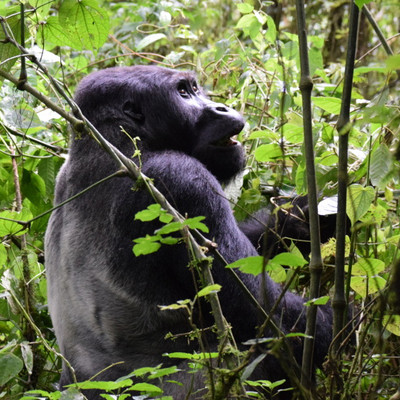
Grauer’s Gorillas
Grauer’s gorillas are found only in eastern DR Congo.
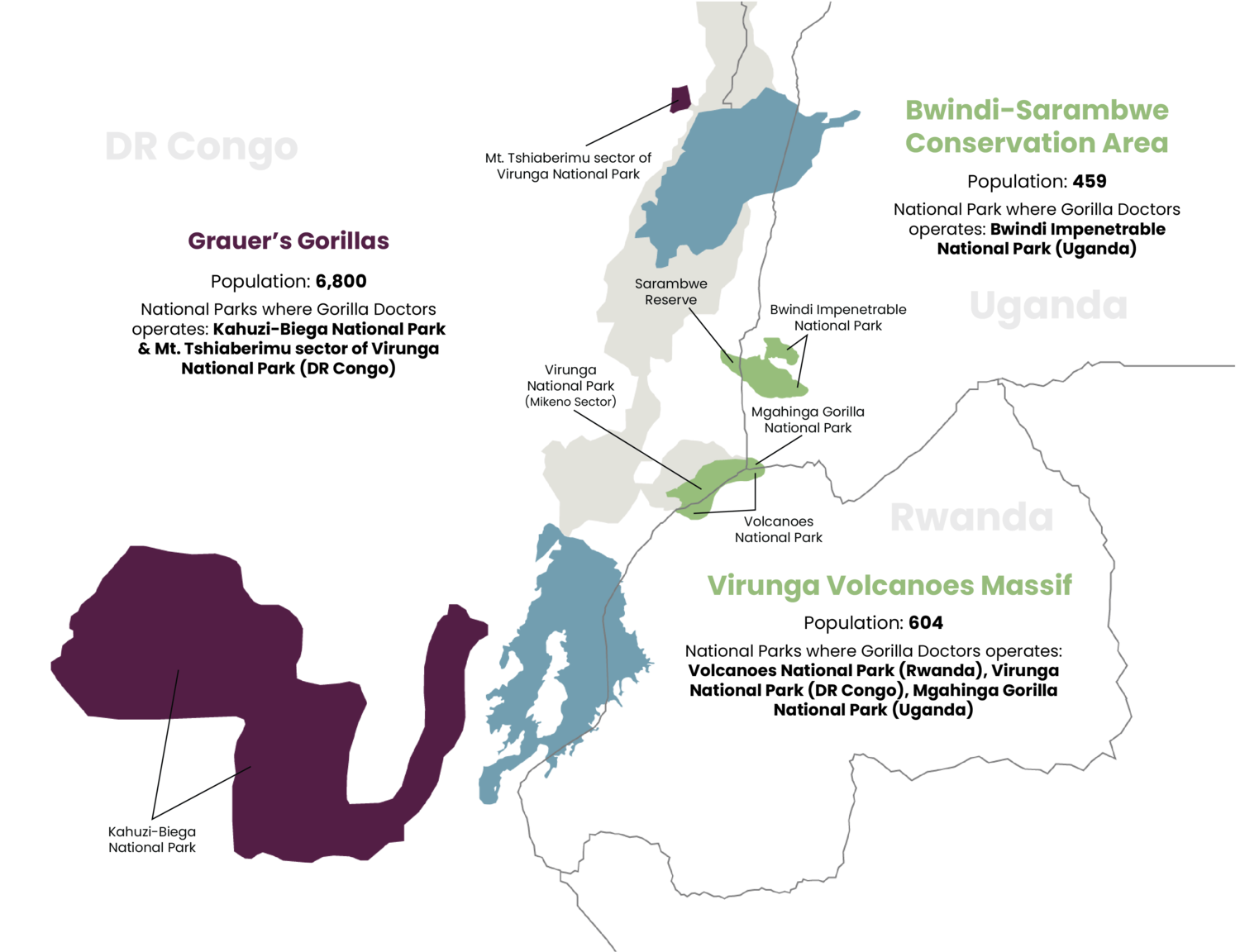
Our Gorilla Patients
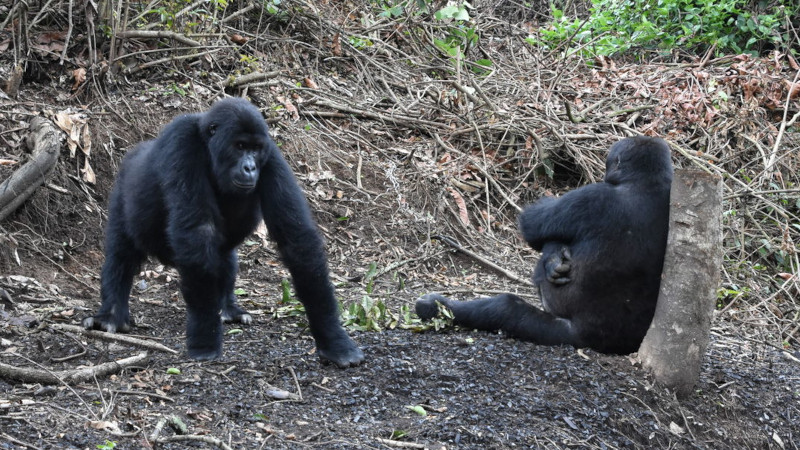
Gorilla Doctors can only treat wild gorillas that are human-habituated, which means they are accustomed to the close presence of humans. Habituation facilitates tourism and research and is what allows us to get close enough to conduct visual health monitoring and provide medicine or anesthetic drugs via dart when an individual gorilla is ill or injured and requires veterinary care.
Mountain Gorillas
Grauer’s Gorillas
Leading Health Threats
Existing health threats to gorillas have intensified and new threats are emerging:
Disease
Habitat Destruction
Poaching
War
Climate Change
Disease
Gorillas and people live in close proximity and come into close contact every day. Infectious disease is an ever-present threat to the survival of eastern gorillas. Respiratory infections are a leading cause of death in mountain gorillas, and in some cases, these infections are caused by human pathogens. Our research has proven this.
Habitat Destruction
Eastern gorillas live largely in protected areas that are forest ‘islands’ surrounded by some of the densest human populations in all of Africa. The density of people in the region combined with limited economic opportunities have placed tremendous pressure on natural resources, leading to deforestation and other types of illegal forest use.
Poaching
Snares set illegally in parks remain a significant threat, though eastern gorillas are rarely the intended target. In most cases, poachers set snares to catch small antelope to feed their families or sell at local markets, just as their ancestors did in the past. Unfortunately, gorillas are curious and playful and can get caught, causing stress, injury, limb loss, and even death.
War
Civil and military conflict are constant threats to both gorillas and people across the region where eastern gorillas range. Instability exacerbates all other threats and places an extraordinary toll on the health and well-being of people, animals, and the environments they share.
Climate Change
Climate change is causing shifts in seasons, quantity of rainfall, and distribution of species, including disease agents and disease vectors (e.g. mosquitos). These changes may also affect food availability and create an increased risk of disease and exposure to extreme weather.
Did You Know?
- Gorilla and human DNA are 98% the same!
- A leading cause of death is physical trauma or injuries such as wounds from gorillas fighting amongst themselves or human-set snares
- Another leading cause of death is respiratory disease
- Gorillas are susceptible to human-borne pathogens; what may be a common cold for humans can cause deadly respiratory infections in a gorilla
- Eastern gorillas live in the wild, on average about 35-40 years
- Eastern gorillas live in groups that range in size from 2 to 45 individuals
- Groups are led by a dominant silverback male; females may transfer between groups
- The term ‘silverback’ refers to a sexually mature male gorilla whose hair on his back turns from black to silver between 11-15 years of age. Younger males whose hair has not yet turned silver are called blackbacks
- When male gorillas reach sexual maturity they often leave the group and spend time as a ‘lone’ gorilla until they can ‘steal’ females from other groups to form their own
- Female gorillas become sexually mature around eight years old and will produce four to six offspring during their lifetime
- From birth to three years of age gorillas are called infants; from 3-6 years oldthey are called juveniles, and from 6-8 years old they are called sub-adults
- Gorillas are vegetarian, but have been observed eating insects
- Grauer’s gorillas are the largest of the four subspecies of gorilla and the largest primate on the planet
- Adult male mountain gorillas weigh 300-500 pounds (136-227kg), but some Grauer’s gorilla males can reach 600 pounds (272kg); adult female mountain and Grauer’s gorillas weigh 150-250 pounds (68-113kg)
- Despite their size, gorillas are rarely dangerous or violent toward humans; thousands of tourists safely visit habituated mountain gorillas every year
- Mountain gorillas do not thrive in captivity; nearly all gorillas in captivity are the western lowland gorilla subspecies
- GRACE in DR Congo is the only sanctuary in the world currently caring for Grauer’s gorillas orphaned by the illegal wildlife trade
Connect With Us
Sign up to receive news from the forest!
"*" indicates required fields
By clicking Sign Up you’re confirming that you agree with our Terms of use.